KEEP PLANNING
time /
space /
about
#064
Eric T. Racher
In a Darke Speakinge: a Ghost Story
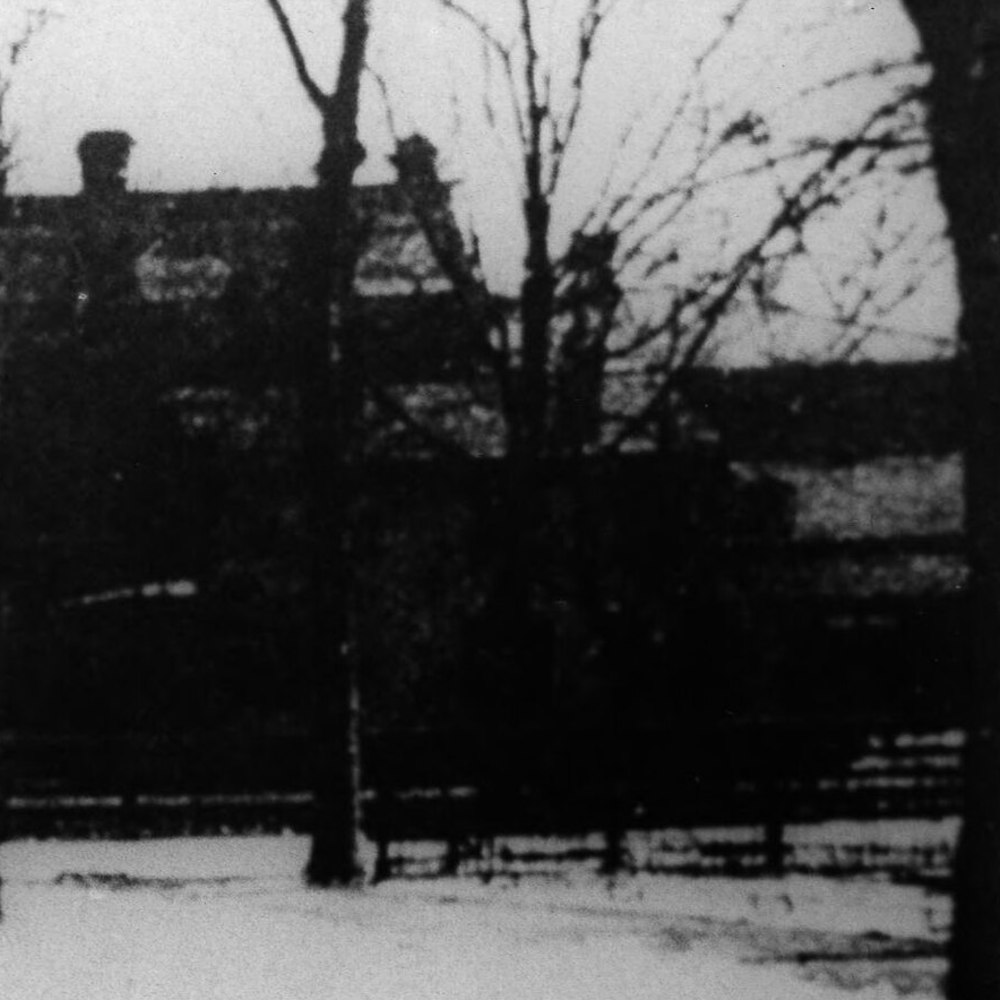
Out of wedlock there is a violence to the act, or rather to its interpretation, and to every fact that follows from it, which might more accurately be attributed to the eye, a stretching of the social contract to the point where it is no longer contracted—on the rack, or in breach, as it were—a pulling, a forcing or a disattracting of that which for lack of a better word we, in our rage for the normative, call natural when it occurs in the amoral world of the dumb beasts, or within the God-ordained bounds of holy matrimony where it is the ‘natural’ expression of the love of husband for wife, of their godly desire to reproduce within the holy covenant of marriage, and of their equally godly desire to be united in an act of profound spiritual and emotional bonding in one flesh, but which, in the darkness and degradation of our post-lapsarian state, can never be wholly untainted by the stain of sin, of its virulence and frenzy and fleshliness, a violence enacted upon the body, though we shore up the soul with the rubble of civilization and with the shards and husks of language that have been handed down to us in prayer. January 23, 1992. 9:37 a.m. Corner of Buchtel and East Market Streets. Akron is a machine for transforming the pure, transcendental geometry of the snowflake into gray, grime-laden slush. The cloying of the pianoforte, dull and muddied, like peanut butter stuck to the roof of the mouth. Chest-high in sludge, trudging against its thickness, fingers sinking into quicksand with each chord. The harpsichord is an improvement on the piano, although in strictly temporal terms, it would be better to say that the piano is a falling off or away from the harpsichord. Crisp attack of plectrum on plucked string, over woolen, mealy thud of hammer. Yet still impure insofar as tempered. The mansion at the top of Eber Street lay vacant for much of the eighties, and the neighborhood children who played on the lawn as the long summer evenings trailed off into twilight, or traipsed through knee-deep snow in the dark winter afternoons once school had let out, would sometimes find their attention had been swept up and seized by the appearance of movement in one or another of the windows that opened up from the dark brick walls of the mansion, which, in spite of only a mere four-score years, more or less, having passed since clay magnate Byron Robinson had the house built on what was then known as Millionaires’ Row (not to be confused with the homonymous stretch of Euclid Avenue in Cleveland, or the many others dotted across the country), of which the Robinson mansion is the only surviving example, since the residences of the other wealthy inhabitants of this area were eventually demolished as their owners, men such as F. A. Seiberling, Ferdinand Schumacher and O. C. Barber, would, with the increasing pollution brought on by the growth of the rubber industry, move on to the greener and more pleasant meadows of Merriman Road, which offered in those days a more wholesomely pastoral landscape in contrast to the degradation of the dark Satanic mills that stained the face of the city, loomed over the neighborhood as a reminder of the weight of all the dead generations, and sometimes the eyes of those children would alight upon the window just as a white, spectral figure disappeared fading into the darkness of the uninhabited interior whence it had come and which seemed to swallow it up into abysses of blackness and memory. Imagine a young woman impregnated out of wedlock. Twelve-tone equal temperament. Temper. Her family sends her to the Florence Crittenton Home for unwed mothers at 715 East Buchtel Avenue, Akron, Ohio, 44305. From temperare, from tempus, and ultimately from the Proto-Indo-European root *temp-, which is itself a variant of the root *ten-, which means ‘to stretch’ or ‘that which is stretched’, and which came to mean a ‘stretch of time’ or time more generally. The baby is born healthy and the woman is persuaded to give it up for adoption. There is a violence to the sound, a stretching of the overtone series as if it were on the rack, a pulling, a forcing or a disattracting of that which for lack of a better word we call natural simply because it is produced ‘naturally’ from the vibration of a string or of a column of air. The woman naturally falls into a depression, is, naturally, it should be added, sent to an institution, and, naturally, once again, commits suicide. There is a violence in the movement from note to note, a wrenching, a jerking as of a stalled engine, an unpleasant sensation of lurching or of being yanked stepwise toward an incoherent vacuity, a lack of cohesion. The young woman’s father loses his temper, yet the string itself is stretched tight, for only then is it able to produce the overtone series. There are whispers, of course. Equal temperament drags the harmonics toward inharmonicity in its rage for violent modulation. It’s a shame, everyone says, but such are the wages of sin, of moral turpitude. January 23, 1963. 9:38 a.m. Corner of Buchtel and East Market Streets. The Florence Crittenton Home for unwed mothers is a machine for transforming the pure, transcendental shame of the flesh into ghosts. The monochord was constructed of spruce wood, the top plank 120 centimeters long, 10 centimeters wide, and 1.5 centimeters thick. Two planks along the sides, glued to the top plank, 120 centimeters long, 6 centimeters wide, and 1.5 centimeters thick, and two pieces capping the ends. No thought had been given to creating a sound box, as this was not for performance, but for experimentation. Aluminum L-angle, 3 centimeters by 3 centimeters, cut into short sections made up the fixed bridges. Aluminum T-bar, slightly taller than 3 centimeters, cut into a short section made up the movable bridge. Nail at one end to fix the string, guitar machine head at the other. A single piano wire, gauge unknown or unremembered. 100 centimeter scale length, for the sake of simplicity in calculating ratios and measuring cents. The wages of sin is death. The man, unburdened by shame or regret, becomes a concert pianist, and many years later, having enjoyed a long and successful career, he visits Steinway Hall, which is located in the Robinson mansion. He does not know about the mansion’s past, nor about the fate of his own child, a son, who was born here in this very house. As he plays the pianos, he is suddenly overwhelmed by a violent perception of the dissonance of the beats pulsating beneath the thirds. He plays a note and sings the third as a simple ratio, then plays the third on the piano. A mere 14 cents difference. It would be more accurate, perhaps, if one were to use the term Everyman, instead of ‘the man’. January 23, 1992. 9:43 a.m. Corner of Buchtel and East Market Streets. The pianoforte is a machine for transforming the pure, transcendental vibration of a string into gray, grime-laden slush. It is said that every tempered interval sounded within the walls of Steinway Hall is the ghost of one of the unwed mothers who gave birth there, of their unrealized lives and desires, or of one of the babies who were born there, that the pulling away from the natural overtone series represents a pulling away from the simple ratios of these women’s bodies, a stretching and thus a deadening of their flesh and its desires and corollaries into respectability, all for the convenience of modulation, for a false and unnatural harmony. A boy, perhaps, out there on the lawn or on the sidewalk, barely glimpses a wispy form in a second-floor window, and from the darknesses of the eye, he is led onward to the darknesses of the tongue and of the ear, led onward to the open pages of a book in which her very existence is filtered through the difference in hertz between the echoes of her stretched and tempered self and the self that might have been. Yet before the selves that might have been, before the first page of the first story, before the epigraph, before the author’s note and acknowledgments page, before the table of contents and the dedications, tucked in there just behind the title page, nestled up against the copyright notice, the publisher’s address and the ISBN, in the midst of all these standardized utterances, which integrate the text as a piece of intellectual property and, lest we forget, the book itself as a commodity, into the legal and commercial systems that make up such a large part of the environs of our life-world, sprawling there inexplicably across the verso of its own leaf, the recto of which has been left wholly blank, is a quote from Paul’s first letter to the Corinthians in the King James translation: For now we see through a glass, darkly; but then face to face: now I know in part; but then shall I know even as also I am known. But perhaps one ought to step back even further, then, before the Robinson mansion was built, before the rubber industry and the canals and the pianoforte, away from international standard book numbers and title pages and rights inquiries, back into the spectre that is Paul’s original Greek: βλέπομεν γὰρ ἄρτι δι’ ἐσόπτρου ἐν αἰνίγματι, τότε δὲ πρόσωπον πρὸς πρόσωπον. Whither is one led by that mirror, that glass? What exactly is that ἐν αἰνίγματι into which the clause settles down so snugly? If indeed αἴνιγμα means a dark saying, a riddle, an obscure saying, an enigma, then the distorting surface of the looking glass (or, more accurately, the polished piece of beaten metal), and by extension the polished surface of the pianoforte, is analogous to the distorting surfaces of language, which always betray us in the act of representation, for all speech conceals as much as it reveals, as the ominous resonance of that word—darkly—set off from the rest of the clause by the comma, suggests. Or perhaps it is analogous to the distorted and distorting stretch of tempered tuning and its notation, which also betray us in the act of representation. Thus from the darknesses of the eye, we are led onward to the darknesses of the tongue and of the ear, even down into die tausend Finsternisse todbringender Rede, for there is perhaps a sense in which all speech is just as much death-bringing as it is life-bringing. William Tynedale translated Paul’s sentence thus: Now we se in a glasse even in a darke speakynge: but then shall we se face to face. Darkly. Dimly. Obscurely. In enigmas. In a dark manner. Indirectly. Imperfectly. In a darke speakynge. These darknesses of the tongue, the darknesses of all speakynge, were elucidated, or perhaps it would be more accurate to say adumbrated, by Saint Jerome in his letter to Pammachius against John of Jerusalem: “If, according to the Apostle Paul, we cannot pray as we feel, and speech does not express the thoughts of our own minds, how much more dangerous is it to judge of another man’s heart, and to trace and explain the meaning of the particular words and expressions which he uses?” January 23, 1992. 9:47 a.m. Corner of Buchtel and East Market Streets. The thick darkness of the winter sky over Akron, the darkness of the night and the darkness of the day. The sun hides its face from us. We do not see face to face, as it were. From the darknesses of the eye, we are led onward to the darknesses of the tongue and of the ear. A daybook is a diary or a journal; it also refers to a book in which an accountant records transactions in chronological order, thus providing the data that will later be entered into the accounting ledger. From the darknesses of the eye, we are led onward to the darknesses of the tongue and of the ear. The failure of the eye leads to the failure of the tongue—an opposing movement, for the weakened eye requires its lens, a distorting device or instrument that, in this case, wrenches the light of the world back into order, into an interpretable image, enters the light of day into its daybook in order to perform its most basic function, that is to say that without this appendage it is wholly ineffectual, just as the tongue is rendered mute by means of its own device. What is the aural equivalent of anamorphosis? Is it possible to conceive of a four-part anamorphic fugue? Thus from the darkness of night and the obscurity of the Akron winter sky, one moves to the darknesses of day, the darknesses of the book of the day. Everything is taken into account. The eye is the instrument of shame. First the eye of the mother, the ever-watchful eye that dove-like sits brooding over the sin and filth of childhood. But the darknesses of the eye lead onward to the darknesses of the tongue. The eye of the mother, as all later eyes of authority, must body forth its judgment in utterance, if shame is truly to be produced. Shame moves from the eye to the tongue and insinuates itself into the brain—that ‘braided ball of sin and intuition,’ as Elton Glaser called it. From the tongue it turns then back to the eye, but this time to the eye of the very one who was object of the first eye’s judgment. Once shame has been instantiated through the gaze of authority and through the speech of authority, the seen begins to observe itself, to judge itself, and shame becomes the lens through which this seeing takes place. The ear begins to hear the tongue’s speech, one’s own speech. The darknesses of this eye—both the physical eye and the mind’s—lead toward the darknesses of the tongue and of the ear as well. The eye turned in upon itself breeds shame in the tongue turned in upon itself, and the tongue turned in upon itself, tongue-tied, as it were, or the ear turned in upon itself—ear-tied, if one may be permitted the indulgence—for there is no difference between the two, is written in the daybook. The tongue’s torsions and contortions. The thousand darknesses of shame-bringing speech. A darke speakynge. We recoil at the gaze of the spectre, a gaze that, in the ferment of our degradation, we despise, and yet to which, equally in our degradation, we are bound in the veniality of our rage for validation, yet another source of our shame. Shall we speak then of the face, the eyes of which still see? Let us return to Paul’s words: now I know in part; but then I shall know even as also I am known. In the darke speakynge, the state of being known, of being seen, lies the innermost, most intimate kernel of our shame. Let us speak then of the face, the eyes of which pretend to be unencumbered. We do not see face to face, πρόσωπον πρὸς πρόσωπον, but rather through the glass, darkly. We leap from onset to onset—pros, pros, pros – bar, bar, bar. In a darke speakynge. The torsions and distortions of the tongue. The eyes unencumbered, wholly unencumbered. The cloying of the eye, dull and muddied, like peanut butter stuck to the vault of the skull. Chest-high in sludge, trudging against its thickness, the eyeball plods through the slush of Akron, as if it were sinking into quicksand with each glance. The ear is an improvement on the eye, although perhaps it might be more accurate to say that the eye is a falling off or away from the ear. The eye poses as a constructive and construing virtue. The eye integrates, but every act of integration is also an act of disintegration, for the impression itself and its integration are forces that act upon the world just as the world acts upon them, and when an impression is made, another earlier impression is necessarily unmade. The eye skips across the landscape, apparently free of all encumberment, and each leap ascends almost as if it were ascending the marble steps of the Pontificio Santuario della Scala Santa in Rome, which once led up to the praetorium of Pontius Pilate in Jerusalem and which Jesus is said to have climbed on his way to trial, and just as Jesus ascended those stairs in his Passion, the eye ascends, or so it believes, towards perfect exhilaration. A betrayal, however, lurks beneath the surface, for the eye can never be wholly transparent, it can never see all, as the eye itself, even at its most unclouded, conceals a stain in its depths, and serves up not the world, but images of the world, darkly. Of the men who impregnated the women sent here, the only thing known of their fate is that they became pianists, every one, and of the ghosts who inhabit the mansion, it is said that they are all are Janus-faced, looking backwards to the past and forwards to the future, but that, much like the damned in Dante’s Commedia, they are unable to see the present moment in the world of the living, and thus if one were to stand face to face with one of them, the spectral form might say, as Farinata degli Uberti said to Dante Alighieri, that they see, like those who are farsighted, the things that are far off, as God illumines them, but when things approach them in time and extension, or are happening now outside the grounds of the mansion, their intellects founder, for they see as through a glass darkly, in a darke speakinge, and unless someone bring them news of it, they know nothing of the present world of living souls beyond this corner of Millionaires’ Row. The monochord was abandoned in that house down on Hazel Street, in the closet of the bedroom. There is no temporal succession in the text. There is no causal relation. There is no character development. The nature of the monochord precludes the possibility of a fully fleshed-out theory of harmony. The dimensions of the monochord preclude the possibility of its being interpreted as a symbol of the coffin. January 23, 1992. 9:52 a.m. Corner of Buchtel and East Market Streets.
***_____
Eric T. Racher lives in Riga, Latvia. His work has appeared in Socrates on the Beach, minor literature[s], Exacting Clam, Your Impossible Voice, Literary Imagination, ballast, iamb and elsewhere. His first book, a sequence of sonnets titled Glosses and Ligatures, will be published by Sagging Meniscus Press in the autumn of 2027.
16 September 2026