KEEP PLANNING
time /
space /
about
#040
Kyle Proehl
Hurricane
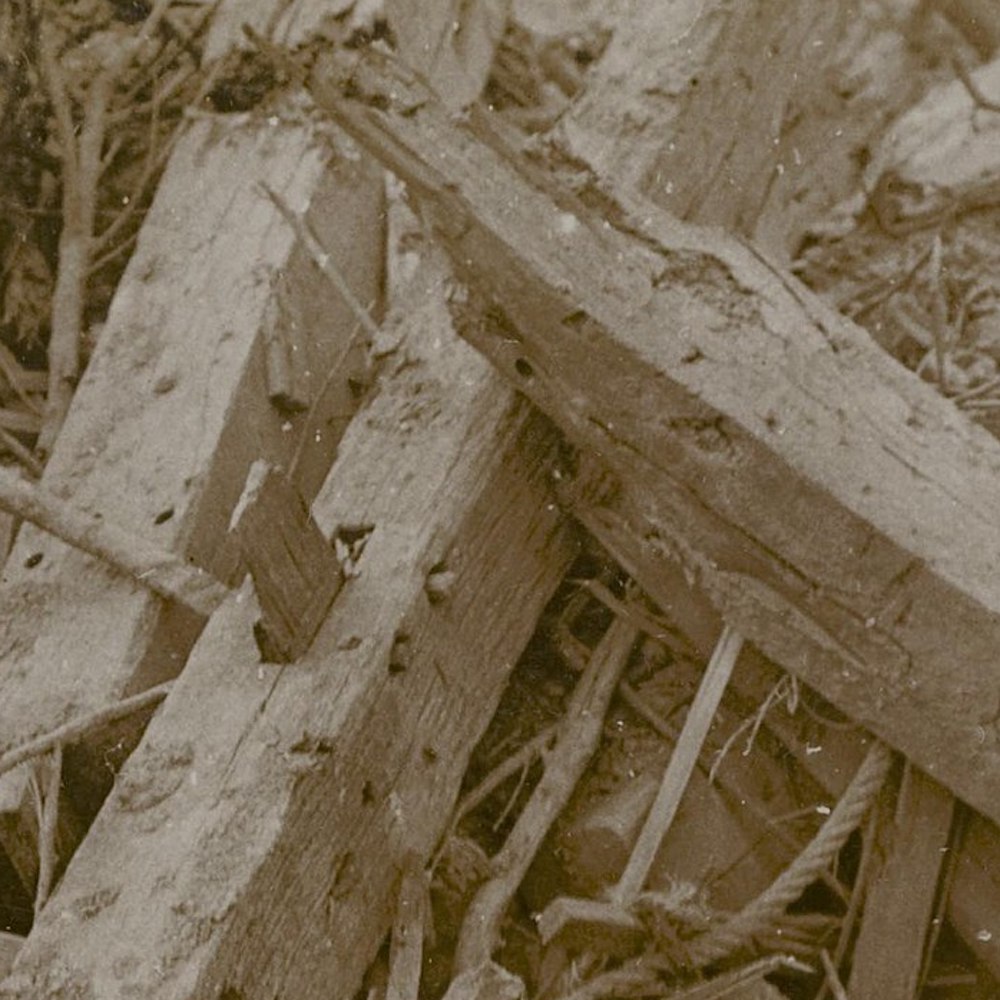
The car was a bronze hatchback with a cramped back seat. When they left that morning it was raining, the windows streaked and pearled long before they reached the bridge that meant they had arrived at the beach. It was a quiet rain, softer coming down than it was spraying up from the street. His sister kept asking where they were going. He kept quiet like he understood. We’re just going to see what happened in the storm, they said. The storm? his sister said. He listened to their answers so that he could repeat them. Then he stared out the window and let the motion of the road draw off the question taking shape. But it was there too in the grass and the trees and the ditch at the road’s edge, following. His sister didn’t ask. He was thinking of those big storms that lashed the windows and shook the walls and howled in the trees and knocked out the power and drove them all, all four of them, into the tiny bathroom in the hallway. He remembered even sleeping in the doorway there, and waking up feeling brave and sheltered. That was not last night. Last night they slept in their beds, and if it rained he hadn’t heard. And now, driving a road that he knew would take them to the beach, knew because they’d been told but also because he could see for himself, as he stared at the ditch along the road he realized that it wasn’t full as it should be but empty. Trailing this thought came a reminder to look for branches, that after a storm they would be lying there, in yards and in the ditch and on the road itself. He wondered if he should tell his parents what he saw or didn’t see. But he didn’t want to upset them, so he fought the urge to share and waited. They drove past the waterpark with its big gorilla in swim trunks and sunglasses, past the museum where he’d tickled a horseshoe crab, past more and bigger houses and then the road broke free of the trees and climbed the bridge over the inlet, seeming at that moment to leave the rain behind. Down to the left the boats, up ahead hotels, and over to the right the jetty reaching into the ocean. His father asked if he could see the waves. He could. Were they big? He didn’t know. And then they had descended the arc of bridge and the waves were out of sight, hidden by the hotel blocks. At the light his father turned right and then left again onto Atlantic. Now and then between chunks of building there were glimpses of the horizon. The Strip was quiet, almost deserted, few cars, fewer people. The stores that sold beach balls and towels and t-shirts and buckets and bikinis all seemed to be closed. Up front his mother murmured, drawing his attention to a sheet of plywood covering a shop window. The boy watched it as they passed. In the window beside the wood a mannequin in swim trunks and sunglasses leaned at an odd angle, as though it had started but not completed a fall, as though an invisible hand held up its descent, letting it lean there, pale and shirtless, caught in the motion of falling, forever. Farther on across the street a man was sweeping the sidewalk with a push broom. As they pulled alongside he stopped and stared without waving. The boy stared back until the man found him, then shuddered and shrank in his seat. There was the jangle of broken glass as the man returned to sweeping. His parents were silent, his sister asleep. The car crept along. He saw more plywood now on the windows and felt they were getting closer and thought of the spiral of a hurricane and the emptiness at its center. His mother made another sound, called his father’s name. They had shown him how to track a storm on the map that arrived with the newspaper, which would print the daily coordinates, which he would then find on the map’s grid. Every storm had a name. His parents watched the storms on television, in colorful, revolving animation, which reminded him of a record skipping, and since he watched it there too, the map felt a bit silly, almost like homework. But he had not been tracking a storm on the map, and they hadn’t been watching any TV storms either. As he turned it over in his mind, looking for the moment he had missed, his mother made yet another sound, what he might later call a gasp. Out his window the white wall looked as though it had been stained, as though a leak had sprung inside and spread like a spilled drink on a tablecloth, only vertical against the wall, and dry like powder or dust, black with golden edges. His father drove very slowly now, clenching his fists and jaw. The stench of it entered the car. Through a missing window the inside of what must have been another shop was gray with ash and disarray, and blacker still than the wall. It looked like a cavern now, like a cave. A second large window hung in pieces, and as they pulled alongside the boy stared, wondering how it could be. The window was shattered in great angular shapes jutting out toward the street, jagged teeth rimming a scowl. It looked as though what held the shards in place was not the frame but the hole in its center, a hole from which all the angles escaped. It looked like arms coming together, hands joined in clutching an absence. The glass shimmered as the sun parted the clouds as though they’d arrived on time, a light that deepened the dark of the hole, plumbing the weight that fell on the boy like an intolerable answer. The darkness held his attention long after it had passed from sight.
***
Kyle Proehl has written for Hobart, Radical Philosophy, Los Angeles Review of Books, Dispatches from the Poetry Wars, and elsewhere.
31 March 2026